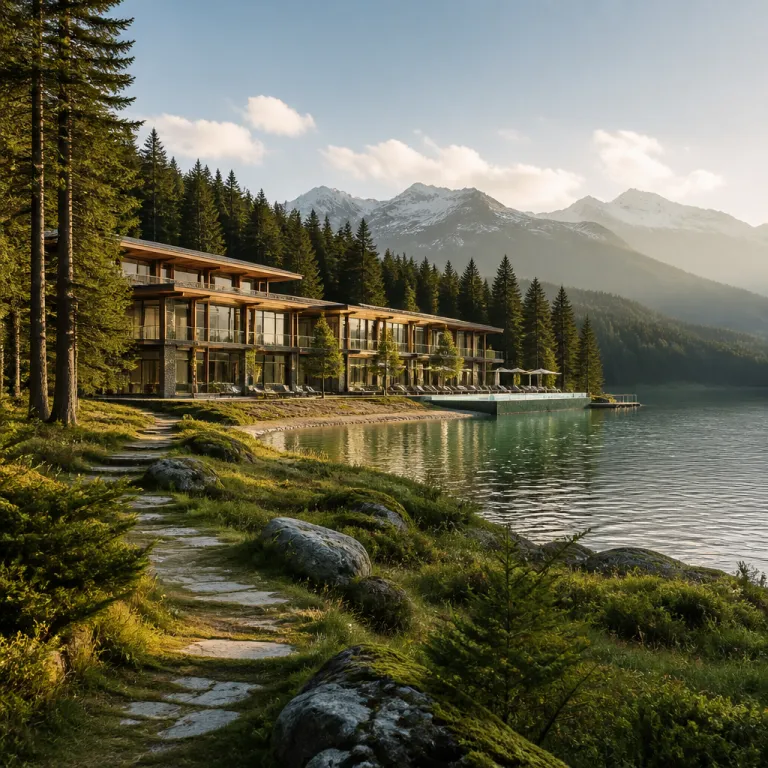
The five dimensions that define a serious hotel Switzerland review
Any credible hotel Switzerland review has to start with structure. A luxury hotel in the Swiss market lives or dies by five dimensions that matter more than marble lobbies. Service density, food and beverage depth, spa quality, design coherence and location access together separate the best hotels in Switzerland from the merely expensive.
Service density is the quiet metric that shapes every room experience. A true five star hotel in Switzerland usually runs a high staff to guest ratio, which you feel when a minibar issue is fixed before you finish your coffee. Industry benchmarks from Swiss Deluxe Hotels suggest ratios of around one employee per guest room in top-tier properties, compared with roughly half that in mid-range hotels. When you read a hotel review for Switzerland, look for mentions of staff names and specific gestures, not just generic praise for the hotel or its rooms.
Food and beverage comes next, because a Swiss stay is as much about the restaurant as the view. A serious property will balance a fine dining restaurant, a relaxed brasserie and a cocktail bar that feels like a destination for locals as well as guests. In 2023, for example, more than 120 Swiss hotel restaurants held at least one Michelin star or a Bib Gourmand, underlining how gastronomy shapes reputation. When a place claims to be among the best hotels in Switzerland, its wine list, breakfast quality and bar culture should all be aligned with that ambition.
Spa depth is not about the size of the hotel pool alone. In the Swiss Alps, a good spa means hydrotherapy circuits, quiet relaxation zones and therapists who understand altitude fatigue as well as jet lag. The Swiss Spa Association notes that wellness revenue has grown steadily since 2018, with alpine resorts leading that expansion. If a pool feels overcrowded at peak hours, that is a red flag your hotel Switzerland review should highlight clearly, because it signals weak planning rather than bad luck.
Design coherence is often misunderstood in a hotel review. A chalet-style property in Andermatt or a lakeside grand hotel in Lucerne can both work, as long as the design language is consistent from lobby to rooms. When corridors feel like a different era from the public spaces, you are looking at a hotel future that has been renovated in patches rather than with intent. A guest quote such as “The lobby felt newly polished, but the corridor carpets told a different story” is more useful than vague comments about style.
Location access completes the framework, especially in compact Swiss cities such as Zurich. Proximity to a train station, lakefront paths or ski lifts in the Swiss Alps often matters more than a marginally better view. A hotel that is ten minutes on foot from the centre of Zurich, Switzerland can be well worth more than a property with postcard views but poor transport links. According to Swiss Federal Railways data, over 90% of the population lives within one kilometre of a public transport stop, so a central hotel that ignores this advantage is missing a core Swiss strength.
How to read a hotel Switzerland review for service, families and wellness
Most travellers skim a hotel Switzerland review for star ratings and photos. A more rigorous approach looks for patterns in how guests describe service, especially when travelling as a couple, solo or with a family-friendly agenda. The dataset behind our framework reminds us that “How to evaluate a luxury hotel?” is answered simply: “Assess service consistency, amenities, and guest reviews.”
For families, the details matter far beyond the headline of a family-friendly hotel. Pay attention to how reviewers describe children age policies, kids’ menus at the restaurant and whether the hotel pool welcomes younger guests at specific times. A property that treats children age brackets transparently and offers real activities earns its place in any serious review of hotels in Switzerland. Comments such as “Our six- and nine-year-olds had their own spa splash hour” tell you more than any brochure line about family focus.
Wellness is now central to Swiss hospitality, especially in the Swiss Alps. When a hotel claims to be a spa destination, your booking decision should hinge on more than a sauna and a small pool. Look for comments about treatment quality, relaxation areas and whether the spa feels calm or like an extension of the main hotel pool corridor. Since 2020, Swiss Tourism has repeatedly highlighted wellness as a strategic growth pillar, which makes it even more important to distinguish marketing language from genuine depth.
Independent travellers should also read between the lines of complaints. Corridor noise, slow lifts and inconsistent housekeeping often reveal that service density is stretched, even in a star hotel that markets itself as one of the best hotels in its region. When multiple reviews mention breakfast chaos or a restaurant that cannot cope at peak times, you are seeing structural issues, not isolated bad luck. Phrases like “We waited 25 minutes for coffee three days in a row” are strong signals that staffing or layout is misaligned.
Families heading to the Swiss Alps will find it useful to cross-check any hotel Switzerland review with specialist guides to family wellness in the Alps. These resources often highlight which hotels genuinely integrate spa access, kids’ clubs and flexible rooms. When a property balances a calm spa with a clearly signed family-friendly pool zone, it usually reflects thoughtful management.
Finally, remember that reviews are snapshots, not verdicts carved in stone. The dataset we use stresses that “Verify recent guest reviews”, “Check for consistent service mentions”, and “Assess problem resolution in reviews”. A hotel that responds well to criticism, fixes issues and communicates clearly deserves more trust than one that hides behind glossy images. In a 2022 survey by HotellerieSuisse, more than two thirds of Swiss hoteliers reported adjusting operations based on online feedback, which shows how much your comments can matter.
Price signals, value and what CHF 400 versus CHF 1,200 really buy
In any honest hotel Switzerland review, price is a signal, not a guarantee. In Switzerland, the gap between a CHF 400 and a CHF 1,200 room night is often about service density, space and location rather than pure glamour. Understanding what each price band usually includes helps you book with clear expectations.
Around CHF 400 in cities like Zurich or Lucerne typically buys a solid four or lower five star hotel. You can expect a comfortable room, a reliable restaurant, a small hotel pool or at least spa access, and a minibar with standard offerings. At this level, the best hotels stand out through attentive staff and efficient access to the nearest train station rather than through opulent design. Federal Statistical Office figures show that average daily rates in Swiss cities have risen since 2019, so checking what is included at each price point is more important than ever.
Move towards CHF 800 and you enter the territory of serious luxury in the Swiss Alps and lakeside resorts. Here, rooms are larger, often with better views, and the spa or pool complex becomes a central feature rather than an add-on. Wine lists deepen, the cocktail bar feels curated, and the restaurant may hold Michelin recognition or at least a strong local following. In this band, a detailed Switzerland hotel review should question whether the experience feels distinctive or simply expensive.
At CHF 1,200 and above, you are paying for rarity and precision. Properties such as Park Hotel Vitznau, with its limited suite count, extensive wine collection and two-Michelin-star Focus ATELIER restaurant, illustrate how depth of offering can justify the rate. In a hotel Switzerland review at this level, the question is not whether the room is comfortable, but whether every interaction feels choreographed without being stiff. Guest remarks like “They anticipated needs I had not yet voiced” are typical of this tier.
Value, however, is not linear with price. A modestly priced star hotel near a train station in Zurich, Switzerland can be well worth more than a remote property with a grand lobby but weak service. When affiliate links or post-affiliate promotions push one option heavily, pause and compare what you actually receive in terms of space, spa access and restaurant quality. The Swiss Competition Commission has repeatedly reminded platforms about transparency obligations, which underlines how carefully you should read the fine print.
For urban stays, our guide to Zurich and Basel as hotel cities explains why the urban side of Swiss hospitality is finally competing with resort legends. Lakeside properties and riverside hotels increasingly invest in design, cocktail bars and wellness, narrowing the gap with alpine icons. A sharp hotel Switzerland review will always weigh these evolving city offerings against traditional mountain retreats.
Case studies : from andermatt to Lucerne, how to read real properties
Abstract frameworks only become useful when applied to real Swiss hotels. Take Andermatt, Switzerland, where The Chedi Andermatt has reshaped expectations of alpine luxury along Gotthardstrasse. Any hotel Switzerland review of this property should examine how its Asian-influenced design, expansive spa and serious wine programme align with its rates.
At The Chedi Andermatt, the interplay between chalet-style warmth and contemporary lines shows what design coherence can achieve. Rooms are generous, with fireplaces, deep bathtubs and minibar setups that feel curated rather than generic. The hotel pool complex, with indoor and outdoor options, demonstrates how a pool can be both a visual statement and a functional wellness hub. Since opening in 2013, the property has regularly appeared in international rankings of top alpine resorts, which gives reviewers a useful benchmark.
Service density here is high, which you feel in the way staff handle ski storage, restaurant reservations and spa bookings. For a solo traveller, this means less friction and more time actually enjoying the Swiss Alps. A detailed hotel Switzerland review should note whether this level of attention holds during peak winter weekends, not just on quiet midweek stays. Comments such as “Even on New Year’s Eve, the concierge recognised us by name” indicate that service culture is embedded, not seasonal.
Contrast this with a historic lakeside property such as Hotel Schweizerhof Luzern, a 19th-century landmark overlooking Lake Lucerne. Here, the story is about heritage, lake views and proximity to the city’s cultural life rather than ski access. A strong review of this Swiss hotel will weigh the charm of high-ceilinged rooms and a grand restaurant against any signs of corridor wear or noise from events. The hotel’s long history of hosting festivals and concerts means that soundproofing and event management deserve particular scrutiny.
Then there is the case of Hotel Belvedere properties in alpine villages, where the name Belvedere often signals a focus on views. A Hotel Belvedere in the Swiss Alps may offer panoramic terraces, a compact spa and a small hotel pool that frames the mountains. The question for your booking is whether the experience is well worth the rate once you factor in access, restaurant quality and room size. A concise guest line such as “The view was five star, the bathroom three star” captures this trade-off clearly.
Waterfront stays deserve their own lens, which is why our guide to Switzerland by water explores how lake boats, river swims and shoreline walks can reshape a hotel trip. When a hotel in Switzerland integrates boat schedules, lakeside jogging routes and terrace dining, it turns location into a lived experience. A thoughtful hotel Switzerland review will always connect these elements back to the five core dimensions.
Online platforms, affiliate links and how to filter the noise
The modern hotel Switzerland review ecosystem is crowded and noisy. Online platforms, influencer posts and booking engines all compete to frame what counts as the best hotels in Switzerland. For an independent traveller, the challenge is to extract signal from a mix of genuine feedback, marketing copy and post-affiliate incentives.
Start by understanding platform bias. Some sites prioritise properties that generate higher commissions through affiliate links, pushing them higher in search results regardless of guest satisfaction. When you see the same hotel in Switzerland promoted repeatedly with similar language, assume commercial logic is at work and cross-check with independent reviews. In 2022, European consumer authorities opened several investigations into opaque ranking practices, which shows how real this issue has become.
TripAdvisor-style scores can mislead, especially in a country where the average hotel rating is already high. In such a strong baseline environment, the difference between 4.4 and 4.7 often reflects expectations rather than absolute quality. Read the text of reviews, not just the numbers, and focus on how guests describe service, noise and the restaurant experience. A line like “Great for a quick business night, less ideal for a romantic weekend” tells you more than a five-star icon.
Transparency about affiliate links is a trust marker. When a hotel Switzerland review clearly states that some links are affiliate links, you can better judge potential bias. On myswitzerlandstay.com, we use affiliate links selectively and never let them override our assessment of whether a stay is well worth your time and money. Since 2021, many travel publishers have updated disclosure statements to align with stricter European guidelines, which is a positive trend for readers.
Look for reviewers who reference concrete details: room orientation, renovation dates, spa opening hours and how the cocktail bar feels on a Tuesday night. Comments about the minibar, the temperature of the hotel pool or the distance to the train station often reveal more than generic praise. When multiple guests mention the same issue, such as corridor noise or slow breakfast service, treat it as a structural signal.
Finally, remember that “Why are hotel reviews important?” is answered in our dataset with clarity: “They guide travellers and encourage service improvement.” A rigorous hotel Switzerland review does not just help you book better rooms; it also nudges Swiss hoteliers to refine service, invest in wellness and think seriously about the hotel future. Your feedback, when precise and fair, becomes part of that quiet pressure for excellence.
The independent traveller’s checklist before, during and after booking
A disciplined checklist turns a vague hotel Switzerland review into a practical tool. Before you book, email the hotel with specific questions about room orientation, renovation status and spa access. The quality and speed of the reply often predict how the hotel will handle more complex requests during your stay.
Ask whether all rooms of your chosen category have the same views, or if some face a courtyard or road. Clarify if the hotel pool is open year-round, whether there are adult-only hours and how families with children age under twelve are accommodated. In alpine resorts, confirm how far the property is from lifts or the train station, and whether transfers are included or charged. A short, factual reply that answers each point is a better sign than a glossy brochure attached without comment.
During your stay, pay attention to the small interactions that rarely make it into glossy brochures. How quickly does the restaurant adapt to dietary needs, and does the cocktail bar feel as well run on a quiet Monday as on a busy Saturday? If something is off, such as a malfunctioning minibar or noise from an event, note how the team responds. A response like “We will move you within the hour and adjust your bill” is very different from silence or vague apologies.
For families, the difference between a marketing claim and reality becomes clear on day one. A truly family-friendly hotel in Switzerland will have staff who speak directly to children, flexible meal times and clear information about children age policies at the spa and pool. When a property treats younger guests as an inconvenience, it usually shows up in both atmosphere and reviews. Comments such as “Our toddler was welcomed by name at breakfast” are strong indicators of genuine hospitality.
After your stay, a structured hotel Switzerland review helps other travellers and, indirectly, the hotel’s management. Comment on service consistency, the state of corridors and lifts, the quality of the restaurant and bar, and whether the spa or pool matched expectations. Mention concrete positives and negatives, such as a particularly attentive concierge or a breakfast that felt misaligned with dinner pricing. Including dates and room types in your review makes it easier for others to compare like with like.
Our own evaluation uses a structured 100-point Restorative Index framework, which measures hotel performance across six pillars. This method, built with hospitality consultants and tourism boards, ensures that each Swiss hotel is judged on comparable criteria. The current version of the Index has been in use since 2022 and is reviewed annually to reflect shifts in guest expectations. When you write your own review, borrowing this discipline will make your feedback far more useful than a simple star rating.
From corridors to cocktails : subtle red flags and quiet excellence
The most revealing details in a hotel Switzerland review are often the quietest. Corridor noise at night, scuffed skirting boards and inconsistent lighting tell you how seriously a hotel takes maintenance. In a true luxury property, public spaces, back corridors and rooms all receive the same level of care.
Breakfast is another stress test that brochures cannot hide. A hotel that serves an ambitious dinner in its restaurant but offers a chaotic, understaffed breakfast sends mixed signals about priorities. When your review notes lukewarm coffee, empty buffet trays or long waits for eggs, you are documenting a gap between promise and delivery. A simple metric such as “We waited 15 minutes for a table on two consecutive mornings” gives future guests a clear benchmark.
Pool and spa areas reveal how a hotel balances revenue with guest comfort. Overcrowded loungers, noisy families in adult zones or unclear signage about children age rules suggest weak zoning and planning. In contrast, a well-managed hotel pool with separate family and quiet areas shows that the property respects different guest profiles. The Swiss Spa Association has repeatedly emphasised zoning as a best-practice tool for avoiding conflict between wellness seekers and playful swimmers.
The cocktail bar is where many Swiss hotels now compete for local relevance. A bar that attracts residents as well as guests usually signals confident management, good training and a serious approach to wine and spirits. When a hotel in Switzerland runs a lively yet controlled bar scene, it often correlates with strong overall service culture. A guest remark such as “The bar felt like a neighbourhood favourite, not just a lobby add-on” is a strong positive sign.
Look too at how a property handles weather and seasonality, especially in the Swiss Alps. A chalet-style hotel in Andermatt that feels cosy in winter but airless in summer has not fully thought through its design. The best hotels adapt lighting, textiles and even restaurant menus to the season, making each visit feel tuned to the moment. Seasonal touches, from lighter duvets in July to fondue-free menus in August, show that management is paying attention.
Finally, remember that the Swiss hotel classification system, from Swiss Lodge to five star Superior, is only a starting point. The segment of five star hotels is growing faster than any other category, which makes rigorous evaluation more important than ever. HotellerieSuisse data for the early 2020s confirms that the upper-luxury tier has expanded both in cities and resorts. A thoughtful hotel Switzerland review, grounded in specific observations from corridors to cocktails, is your best tool for navigating this increasingly crowded field.
Key figures that sharpen any hotel Switzerland review
- Average online ratings for Swiss hotels tend to cluster at the higher end of the scale, which means that even small differences in scores can signal meaningful gaps in service or maintenance. On several major platforms in 2023, the median rating for Swiss properties hovered around 4.3 out of 5.
- A large majority of travellers read reviews before booking, so each detailed hotel Switzerland review contributes directly to how hotels in Switzerland evolve their service. Global surveys by booking platforms regularly report figures above 80% for review usage in trip planning.
- The five star and five star Superior segment in Switzerland is expanding faster than lower categories, increasing choice but also making it harder to identify the best hotels without a clear evaluation framework. HotellerieSuisse statistics for the last five years show a steady rise in rooms at the top end of the market.
- Flagship properties such as Park Hotel Vitznau, with its focus on suites, gastronomy and cellar culture, illustrate how top-tier Swiss hotels invest heavily in depth of experience. Its wine cellar, for example, holds tens of thousands of bottles, turning oenology into a core part of the stay.
- Structured tools such as a 100-point Restorative Index, which measures hotel performance across six pillars, help bring consistency and transparency to luxury hotel assessment in Switzerland. The framework we use was last updated in 2023 to reflect shifts in wellness expectations and digital service standards.
FAQ about reading and writing a hotel Switzerland review
How should I evaluate a luxury hotel in Switzerland before booking ?
Start by checking recent reviews for comments on service consistency, spa quality, restaurant performance and noise levels. Then contact the hotel directly with questions about room orientation, renovation dates and access to the train station or ski lifts. The clarity and tone of the reply often predict how the team will handle your stay.
What is the Restorative Index used in your reviews ?
The Restorative Index is a structured 100-point framework that measures hotel performance across six pillars, including service, design, wellness and food and beverage. It was developed with hospitality consultants and tourism boards to bring more transparency to luxury hotel assessment. Using such a framework ensures that different Swiss hotels are compared on consistent criteria.
Why do online ratings sometimes feel unreliable for Swiss luxury hotels ?
Because the average rating in Switzerland is already high, small numerical differences can hide big qualitative gaps. Platform algorithms and affiliate links can also influence which hotels appear first, regardless of guest satisfaction. Reading the text of reviews, not just the scores, is essential for an accurate picture.
What questions should independent travelers ask a hotel before confirming a booking ?
Ask about room size and orientation, whether all rooms in your category share the same views, and if any major renovations are planned during your dates. Clarify spa and pool rules, especially for families with children age under twelve, and confirm distance to key transport such as the nearest train station. These answers will help you judge whether the stay is well worth the rate.
How can my own review genuinely help improve Swiss hotels ?
Focus on specific, factual observations rather than general impressions. Comment on service response times, breakfast organisation, spa atmosphere and how issues were resolved, as suggested by the guidance to “Verify recent guest reviews”, “Check for consistent service mentions”, and “Assess problem resolution in reviews”. Detailed feedback gives hotel teams concrete data to refine training, staffing and design decisions.