Reading altitude through materials in swiss hotel interior design
Walk into a Swiss hotel in the Alps and the materials speak first. In the best examples of Swiss alpine hotel interiors, stone, wood and concrete quietly signal whether you are at 800 metres in a valley town or high above the tree line near a ski ridge. For travellers choosing luxury hotels in Switzerland, learning to read these interiors is as revealing as checking the view from the rooms.
Across Switzerland, many hotels now prioritise local materials in their interior design, a shift that reflects deeper, place specific thinking. Swiss hoteliers and interior designers understand that a mountain hotel cannot feel interchangeable with a city grand hotel, so they work hand in hand with local artisans to translate altitude into texture. The result is a new generation of alpine interiors where stone, Arolla pine (Pinus cembra) and exposed concrete form a clear design language rather than decorative noise.
This language is not theoretical; it is rooted in the long history of the Swiss chalet and its chalet interior traditions. Early twentieth century chalets relied on thick walls, rough stone bases and heavy wood beams to survive winters in the Swiss Alps. Late twentieth century modern hotels brought concrete and glass, sometimes erasing the traditional Swiss character, while today’s design hotels try to reconcile both eras in a more thoughtful alpine style.
Stone and thermal water: when geology becomes interior design
Nowhere in Switzerland is the argument for stone more precise than at 7132 Hotel in Vals. Here, contemporary Swiss mountain hospitality is distilled into Peter Zumthor’s thermal baths, where local quartzite stone defines every surface and turns geology into architecture. The hotel interiors extend this thinking into the rooms and dining spaces, using the same stone to remind guests that they are literally inside the mountain.
In Vals, the stone is not a generic alpine motif; it is quarried metres away, cut by hand and laid in thin horizontal bands that echo the rock strata of the surrounding peaks. This approach to interior design makes the hotel feel anchored to its site in the Swiss Alps, rather than like a luxury property that could be moved to Zermatt or Crans-Montana without anyone noticing. It is a quiet but firm rejection of anonymous international style hotels that treat the Alps as a backdrop instead of a structural partner.
Other Swiss hotels have followed with their own stone narratives, from the concrete and granite mix at The Chedi Andermatt to the stone base levels of historic Kulm Hotel properties in St. Moritz. In each case, the choice of stone, its finish and its contact with the hand tell you the altitude story before you even see the ski slopes. For design conscious travellers using a booking platform like myswitzerlandstay.com, these details are a reliable indicator of whether a so called luxury hotel truly belongs to its mountain.
Arolla pine and the science of sleeping in the swiss alps
Move east into the Engadine and the material palette shifts from stone to wood, especially Arolla pine, also known as Pinus cembra. In many St. Moritz and Pontresina hotels, entire rooms are lined with this fragrant wood, creating chalet style interiors that feel both traditionally Swiss and surprisingly modern. Guests often report deeper sleep in these Arolla clad rooms, and local hoteliers are quick to connect that to the material itself.
Arolla pine has natural insulating properties that stabilise temperature and absorb sound, which matters at higher altitude where nights can be sharply cold even outside the ski season. Research from Austrian and Swiss forestry institutes, including studies by Joanneum Research and the Swiss Federal Institute for Forest, Snow and Landscape Research (WSL), has explored how the scent of this wood, released slowly by the warmth of the interior, may have a calming effect on heart rate, turning the material into a kind of built in wellness feature. When alpine hotel designers specify Arolla for a design chalet or for a contemporary Swiss chalet renovation, they are making a statement about comfort that goes beyond visual chalet design clichés.
In these Engadine interiors, you see a different side of Swiss mountain hotel thinking, one that favours hand finished joinery, carved panels and low ceilinged dining spaces that hold heat. Luxury hotels such as Badrutt’s Palace or Kulm Hotel St. Moritz often mix historic pine rooms with more modern suites, allowing travellers to choose between classic chalet interior charm and cleaner lined alpine style spaces. This coexistence of old and new woodwork shows how interiors can respect traditional Swiss craft while still appealing to a solo explorer who prefers a quieter, more minimal room.
Concrete, timber and the new alpine style in switzerland
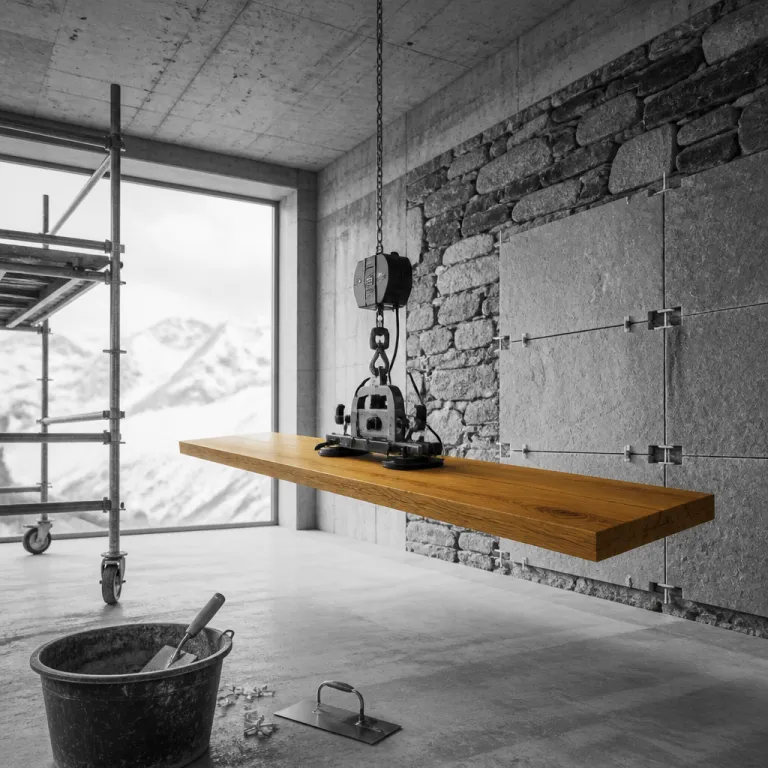
The most interesting tension in current Swiss hotel projects lies between modernist concrete and traditional timber. Properties like The Chedi Andermatt, several design hotels in Crans-Montana and experimental chalet concepts in Valais try to balance exposed concrete slabs with warm wood interiors. When this balance works, the hotel feels both rooted in the mountain and unmistakably contemporary.
Concrete entered the Swiss Alps in the late twentieth century as a symbol of progress, but many early hotels used it without sensitivity to scale or context. Today’s hoteliers are more careful, often pairing concrete with natural materials such as stone and Arolla pine to soften its impact and signal altitude more clearly. In some ski focused hotels near Zermatt, for example, you will find raw concrete circulation cores wrapped by chalet style wings, so that guests move between modern structure and traditional Swiss atmosphere in a single walk from lobby to rooms.
This hybrid approach is visible in the way interiors are detailed, from hand trowelled concrete walls in the spa to wood lined corridors that lead to the dining room. Swiss interior architects now talk openly about “reading” materials as part of the guest journey, and they design chalet interiors that shift from heavier stone at ground level to lighter wood higher up. The result is a layered alpine style where each floor of the hotel quietly reflects its position between valley and summit.
From Gstaad to Zermatt: how altitude codes shape luxury hotels
Altitude does not only change the view; it changes the material script of a Swiss hotel. In Gstaad, where elevations are gentler, many luxury hotels lean into the image of the Swiss chalet, with deep balconies, carved wood façades and interiors that feel like expanded farmhouses. The Park Gstaad, with interiors by Joseph Dirand completed in 2010, offers a more restrained reading of this chalet style, using pale wood, stone and carefully edited furniture to update a historic mountain hotel without erasing its past.
Dirand’s work at The Park Gstaad shows how renovation can respect traditional Swiss cues while introducing a modern design language that appeals to international travellers. Rather than covering every surface in heavy wood, he uses stone floors, clean lined fireplaces and generous textiles to create alpine interiors that feel calm instead of crowded. This is Swiss mountain hotel design at its most confident, where the designer trusts the mountain and the materials to carry the story without resorting to clichés.
In Zermatt, the material palette shifts again, with more stone bases, steeper roofs and interiors that must handle serious ski traffic. Properties such as The Omnia, opened in 2006, or the so called experimental chalet style hotels in the village use stone and concrete to ground their structures against the Matterhorn winds, then soften the interiors with wood, wool and generous glazing. For travellers comparing hotels on myswitzerlandstay.com, paying attention to how each property handles this stone wood balance is a quick way to separate genuinely thoughtful design hotels from those that simply repeat the word luxury.
Sustainability, thin surfaces and the future of alpine interiors
As climate pressure reshapes the Swiss Alps, the next chapter of high altitude hotel design is being written in the language of sustainability. Architects and hoteliers are experimenting with thin body stone surfaces, engineered wood and recycled materials that reduce weight and resource use without losing the tactile qualities guests expect. Green roofs and geothermal systems are becoming standard in new mountain hotels, turning the entire building into a kind of discreet environmental machine.
These innovations are not cosmetic; they change how interiors feel and function. A hotel that uses geothermal energy can maintain more stable temperatures in its rooms and spa, which allows designers to specify more natural materials without over insulating. Thin stone panels, when used intelligently in a design chalet or a renovated grand hotel, can echo the visual weight of traditional masonry while dramatically cutting structural load and embodied carbon.
Swiss hoteliers increasingly see sustainability as part of their luxury offer, not a constraint, and they work with interior designers and local artisans to ensure that new materials still read as authentically alpine. Guests notice when a so called luxury hotel in Crans-Montana or St. Moritz feels over insulated and airless, just as they notice when a dining room is all concrete and glass with no sense of the mountain outside. For a deeper look at how these choices extend to food and beverage, the analysis of hotel restaurants on myswitzerlandstay.com under the theme of the fondue problem offers a parallel critique of authenticity and intent.
How to read materials when booking swiss hotels online
For travellers using a platform like myswitzerlandstay.com, learning to decode materials is a practical skill, not a design hobby. When you scan photos of a Swiss mountain hotel, look first at the base materials in the lobby and spa, then at the walls and ceilings of the rooms. Stone at ground level, Arolla pine or other local wood in sleeping areas and a thoughtful mix of concrete and timber usually signal a property that understands its altitude.
Pay attention to how often the word luxury appears in a hotel description compared with specific mentions of stone type, wood species or construction details. A grand hotel that talks about its history, its relationship to the mountain and its use of natural materials is usually more serious about design than one that leans on generic phrases and staged lifestyle images. When in doubt, look for signs of collaboration with named Swiss designers, local artisans or architecture firms, as these partnerships often produce more coherent alpine style interiors.
Finally, remember that materials extend into the smallest details, from the hand feel of a stair rail to the acoustics of a dining room during breakfast. If a property in Zermatt or Crans-Montana shows images of stone heavy spa areas, wood lined corridors and rooms that balance modern lines with traditional Swiss warmth, you are likely looking at a hotel that belongs to its landscape. In a market crowded with design hotels and self proclaimed boutique properties, this ability to read stone, wood and concrete may be your most reliable booking filter. To support this, image galleries on myswitzerlandstay.com increasingly include descriptive alt text such as “Arolla pine panelled bedroom in Engadine hotel” or “quartzite stone spa in Vals”.
Key figures on materials and swiss alpine hotel design
- Industry surveys, including reports from hotelleriesuisse and Switzerland Tourism published between 2018 and 2022, suggest that a clear majority of Swiss hotels now use local materials such as stone, Arolla pine and regional woods as a core part of their interior design, reflecting a long term move toward place specific concepts.
- The shift toward blending traditional and modern materials in alpine interiors has accelerated since the early twenty first century, following a late twentieth century period dominated by concrete heavy construction in the Swiss Alps.
- In contemporary mountain hotel projects, stone, Arolla pine and concrete are the three materials most frequently cited by architects as indicators of altitude and local identity in the Swiss Alps.
- Swiss hoteliers report, in internal guest satisfaction tracking and interviews published in trade magazines such as Hotel Revue, that guest satisfaction scores are consistently higher in rooms where natural materials such as local stone and Arolla pine are visible and tactile, compared with fully synthetic or carpet heavy interiors.
FAQ about materials and altitude in swiss hotel interiors
Why do swiss hotels use so many local materials in their interiors ?
Swiss hotels rely on local stone, wood and sometimes concrete because these materials reflect the surrounding landscape and culture. As one expert summary from a Switzerland Tourism design briefing puts it, “Why do Swiss hotels use local materials? To reflect the local environment and culture.” For travellers, this means that a hotel interior can offer an immediate sense of place that a generic international design cannot match.
How does altitude influence swiss hotel interior design ?
Altitude affects both climate and available resources, which in turn shape interior design choices. At higher elevations, thicker stone walls, insulating woods such as Arolla pine and compact room layouts help retain heat and manage snow loads. Lower altitude properties may use lighter materials and larger glazed areas, but the best alpine hotel interiors still reference the mountain through stone bases and timber structures.
What materials usually indicate that a hotel is truly alpine ?
In the Swiss Alps, stone, Arolla pine and carefully used concrete are the clearest indicators of an alpine focused interior. Stone often appears in lobbies, spa areas and façades, while Arolla pine or other local woods line rooms and corridors. Concrete, when exposed, tends to signal a more modern interpretation of the mountain hotel, especially when balanced by warm wood and textiles.
How can I evaluate materials when booking a swiss hotel online ?
Look closely at photos of lobbies, rooms and dining spaces, paying attention to whether stone and wood appear as structural elements or just decorative veneers. Hotels that describe specific materials, such as local quartzite or Arolla pine, usually take their design more seriously than those that only mention luxury in vague terms. Reading guest reviews for comments about warmth, acoustics and atmosphere can also reveal how well the materials perform in daily use.
Are modern concrete heavy alpine hotels less authentic than traditional chalets ?
Concrete heavy hotels are not automatically less authentic, but their success depends on how they relate to local materials and altitude. When concrete is combined with regional stone, natural wood and thoughtful proportions, it can express a contemporary alpine style that still feels rooted in the Swiss Alps. Problems arise when concrete is used without reference to place, resulting in interiors that could sit in any city and ignore the mountain outside.